कीमत लोड हो रही है
लिक्विडिटी कंट्रोलरसार्वजनिक लिक्विडिटी कंट्रोलर

सार्वजनिक 4TEEN लिक्विडिटी कंट्रोलर

Automation route को जगा सकता है, लेकिन contract gate खुला होने पर कोई भी wallet फिर भी bootstrapper को खींच सकता है।

यह पेज किसी बंद ops panel जैसा नहीं लगना चाहिए। इसे एक बात साफ़ कर देनी चाहिए: controller-side TRX दिखता है, reserve-side inventory दिखती है, और release rules अब भी on-chain रहते हैं।

अगर UTC window खुली है, controller threshold से ऊपर है, और signing wallet के पास पर्याप्त network resources हैं, तो automation layer किसी दिन चूक भी जाए तब भी wallet से liquidity execute हो सकती है।

  • PUBLIC TRIGGER. CONTRACT GATE.
  • AUTOMATION HELPS. CONTRACTS DECIDE.
  • BOOTSTRAP FIRST. EXECUTE ON-CHAIN.
Live liquidity read failed. थोड़ी देर में refresh करके फिर कोशिश करें।
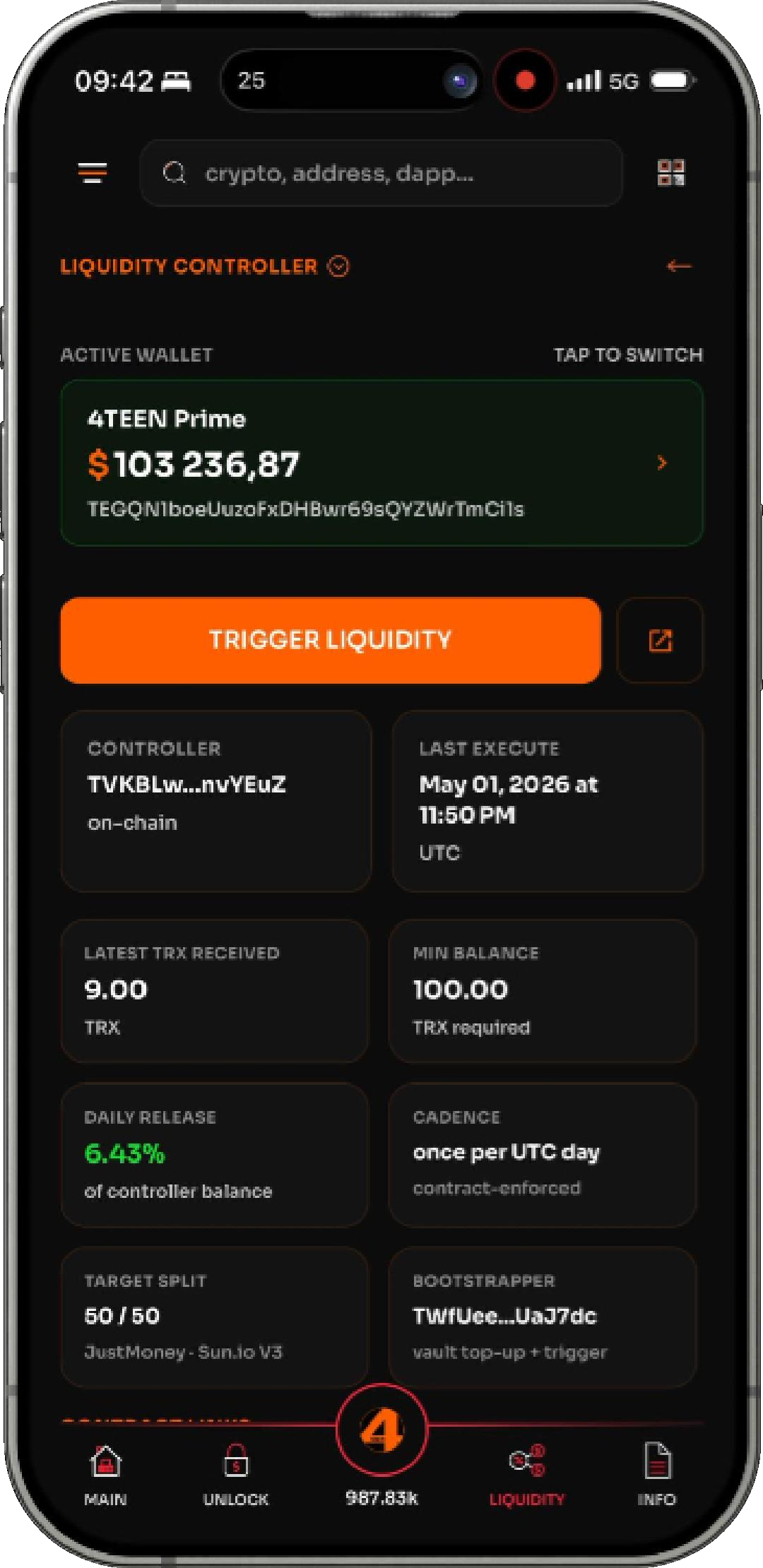
4TEEN public liquidity controller mobile wallet preview

Website proof layer है। wallet manual trigger, resource checks और final signing के लिए execution surface है।

Website proof layer है। wallet manual trigger, resource checks और final signing के लिए execution surface है।

Public Route

Automation configured है। Public execution अब भी wallet का है।

Wallet app में automation path पहले से मौजूद है, लेकिन इससे भी महत्वपूर्ण संदेश व्यापक है: यह route अब भी public है। जब contract conditions पहले से satisfied हों, तो signing wallet bootstrapper को जगा सकता है।

Public Liquidity Controller

कोई भी wallet route को जगा सकता है। liquidity सच में move होगी या नहीं, यह controller ही तय करता है।

यही powers का सही separation है। Automation timing में मदद कर सकता है, लेकिन controller और bootstrapper authority layer बने रहते हैं। अगर कोई bot pause हो जाए, तो execution path गायब नहीं होता।

  • Direct 4TEEN buys, purchase TRX का 90% controller balance में भेजती हैं।
  • Controller execute करने से पहले LiquidityBootstrapper, FourteenVault से token side तैयार करता है।
  • Once-per-UTC-day rule, minimum balance, release percentage और split on-chain ही रहते हैं।

Automation

Wallet repo में wake-up path पहले से wired है

Mobile flow liquidity trigger और automation helper को साथ में expose करता है। इससे scheduler visible होता है, लेकिन scheduler कोई hidden operator नहीं बन जाता।

Manual trigger

अगर automation चूक जाए, तो user अब भी route को manually sign कर सकता है

Wallet, normal user session से bootstrapAndExecute() call कर सकता है। अगर gate खुला है और resources available हैं, तो liquidity फिर भी complete होती है।

इसीलिए इस पेज को private back office के बजाय public controller के बारे में बात करनी चाहिए। Route automation layer से आगे भी बना रहता है।

Trigger Model

जब कोई Trigger Liquidity tap करता है, तो वास्तव में क्या होता है

ईमानदारी से कहें तो route सरल है: पहले bootstrapper day gate check करता है और executor inventory top up करता है, फिर controller TRX release करता है, फिर दोनों market paths को उनका split मिलता है।

bootstrapAndExecute()

Trigger path public है, resource-aware है, और अब भी contracts द्वारा governed है।

यह कोई fake admin button नहीं है। Wallet को normal network conditions satisfy करनी होती हैं, और route तभी आगे बढ़ता है जब execution time पर वही controller rules फिर भी pass होते हैं।

  • Step 1: bootstrapper controller window check करता है और allowed release size compute करता है।
  • Step 2: market-side leg चलने से पहले bootstrapper, FourteenVault से executor-side 4TEEN top up करता है।
  • Step 3: controller release execute करता है और flow को JustMoney और Sun.io V3 में 50 / 50 split करता है।

Resources

Normal wallet rent या preloaded energy से route cover कर सकता है

App इसे पहले से resource-aware action के रूप में frame करता है। मुद्दा कोई hidden server key नहीं है। मुद्दा यह है कि public wallet अब भी route को साफ़ तौर पर finish कर सकता है।

Rule set

Scheduler convenience कभी भी contract rule set को override नहीं करती

Bot window miss होने से cadence rewrite नहीं होता। Button जल्दी दबाने से gate bypass नहीं होता। Contracts अब भी route को accept या reject करते हैं।

यही सही market signal है: public trigger, visible reserve prep, deterministic release rule।

Reserve Path

Reserve tokens inventory हैं, free circulation नहीं

Controller-side TRX route का केवल आधा हिस्सा है। Token side को भी isolated inventory चाहिए, और इसी वजह से दो execution paths को उनके balances मिलने से पहले FourteenVault मौजूद है।

Reserve layer

Market execution शुरू होने से पहले FourteenVault public liquidity route को back करता है।

इन 4TEEN balances को reserve-side working inventory के रूप में पढ़ा जाना चाहिए। ये ordinary wallet balances नहीं हैं और इन्हें freely circulating supply की तरह frame नहीं किया जाना चाहिए।

  • Controller execute करने से पहले vault inventory bootstrapper path में topped की जाती है।
  • JustMoney और Sun.io V3 को prepared balances केवल तब मिलते हैं जब route valid होता है।
  • Reserve custody, controller TRX और executor destinations एक ही engine की अलग-अलग layers हैं।

JustMoney path

JustMoney path

Executor A, allowed release का आधा हिस्सा लेता है और अपनी token inventory prepared होने के बाद AMM-side liquidity path चलाता है।

Sun.io V3 path

Sun.io V3 path

Executor B दूसरा आधा हिस्सा लेता है और उसे अपने prepared token side के साथ concentrated-liquidity path से route करता है।

इसीलिए पेज को केवल एक vanity total print करने के बजाय route समझाना चाहिए। Reserve inventory, controller balance और execution destinations अलग-अलग काम करते हैं।

Next Step

जब आप route को खुद जगाना चाहें, तो wallet खोलें

Site वह जगह है जहाँ आप state verify करते हैं। Mobile wallet वह जगह है जहाँ real user resources inspect कर सकता है, bootstrapper call कर सकता है, और अगर controller gate पहले से open है तो route sign कर सकता है।